Calm

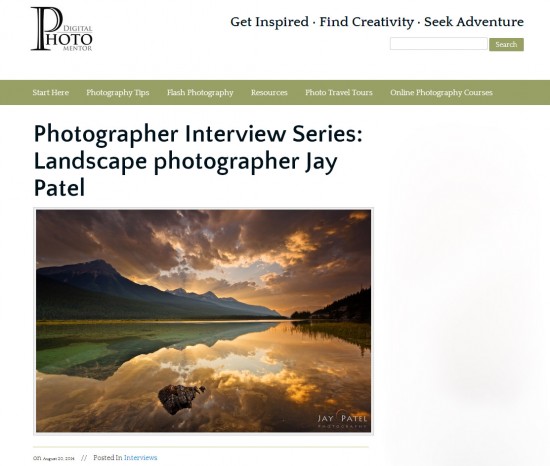
Here’s a shot from Nine Mile Pond in the Everglades. It’s a beautiful place to watch the sunrise –but on this morning,I wasn’t getting any good photos. Although the sunrise was pretty,it wasn’t very photogenic –and the water was a bit choppy. A couple of test shots failed to get me excited.

I wanted to transform the scene. So I pulled out my neutral density filter. The idea was to block some of the light coming into the lens with a grey filter –that would mean I could use a much longer shutter speed. The effect was exactly what I wanted. A 25-second shutter speed (f/8) blurred out the waves,giving the water a smooth,calm surface. The slowly moving clouds blurred just a bit –which left the sky looking dreamy. Most importantly,the reflected light on the water scattered with each wave,producing an opalescent glow.

Simple,in-camera techniques like this one can turn an ordinary scene into something just beyond the usual. Have you used a neutral density filter for a similar effect?

Quick Tips:Point of Interest


What is the most important element in your photograph? Can you identify it,or is your eye pulled from one element to another? The next time you go out to shoot,take a moment to consider the scene carefully.
Choose a single interesting element…a leaf,a water droplet,a rock,a tree…and see if you can find a way to make that element stand out in your photograph. There are so many ways to build an image around a single point of interest.

  • Remove distracting elements from the frame by moving around to change your composition…or by moving them physically.
  • Use a wide aperture to blur out distracting details in front of or behind your point of interest.
  • Use color to make one object stand out.
  • Use leading lines to direct the viewers attention toward your point of interest.
  • Watch for patterns…an element that breaks the pattern will attract attention.

There may be many elements in the scene that interest you. Why not make several images –each showcasing one interesting object –rather than trying to include them all in a single frame?

To learn more about composition and color check out our eBooks below:

Glow of Life


Life is beautiful! Here’s a touch of fresh new life to give you a little pleasure as you wait for Spring! I took this photograph in Great Smoky Mountain National Park.

I wanted the flower to stand out,so I blocked all the light except for a little beam that was falling directly on the flower. The light on the flower is completely natural,but there were other spots of light in the scene as well. I had to use my body and my camera bag to block the light that I didn’t want to include in the image. I wanted just one trillium flower in the frame. I chose the title to match the image…Glow of Life!

Salt and Sand

 This is a shot from Death Valley National Park in California. The salt flats are huge –40 miles long and 5 miles wide –but it’s the tiniest details that grabbed my attention. The largest of these crystals is just three or four millimeters wide.

I was waiting for sunset near Badwater,but the clouds were gone,and there wasn’t much change of getting a gorgeous sunset. So,instead of searching for appealing foreground objects,I pulled out my macro lens and started looking for details. It didn’t take long for me to notice that in some places,the salt crystals were more spread out,so that I could see each one individually. I loved the graduated sizes spread out across the sand.

I set up my tripod nice and low to the ground,and then adjusted my lens so that the glass was parallel to the ground. When you are working with a macro lens –and when you get in this close –your depth of field is incredibly narrow. I wanted to get everything in focus,so I spent extra time making sure I had my camera set up just right.

I also needed to make sure to provide a clear point of interest for my viewer. When you are working with hundreds of similar objects,that can be pretty difficult! I chose my composition carefully so that a single larger crystal dominates –and smaller crystals fill the frame. Notice that the largest crystal is off center –and the others seem to get gradually smaller as you move through the image from the bottom left to the upper right. The placement of the crystals is random –but the composition is anything but. Despite the randomness of the natural objects,there is a clear,diagonal structure to this image. That was important to me,since a diagonal comp is usually more dynamic and interesting than a horizontal or vertical one.

Post-production was pretty easy. I wanted to make sure the patterns in the salt stood out,but it was equally important to make sure I didn’t lose any detail in the brightest white areas. A little bit of contrast and a careful white balance adjustment did the trick. I brightened the largest crystal just slightly to make sure it grabbed your attention. I also removed two small corners of crystals that punched their way into the image at the bottom. They were distracting,and I didn’t mind seeing them go.

eBooks:What the heck is a Histogram?

Price: $10.00

Format:eBook,PDF format,37 pages

Size:21.9 MB

Requirement:Adobe Acrobat Reader 9.0 or greater

Add to Cart


More Details »

In the Spotlight

Yellowstone Falls from Artist Point is a sight to behold,but at this particular moment the view was extraordinary. The sun broke through heavy clouds,bathing the falls with light,and leaving the rest of the valley cloaked in soft shadow.

This was a waiting game…I watched the clouds for over 3 hours on this cold and rainy day before the spotlight illuminated Yellowstone Falls. I chose to under expose the image to ensure that the bright highlights in the water were not blown out. Even with under exposure,the falls were so bright that I had to process a single RAW image twice,and than combine them using our iHDR workflow.

By the time I was ready to put away my camera,my gloves were wet and my fingers were cold and numb. But it was worth the result…I wouldn’t hesitate to do it again.

Featured Download:Iceberg

Click to Download

Jökulsárlón was,without question,my favorite of the places we visited on our first trip to Iceland. I wanted an incredible simple composition for this image –so I chose a single iceberg as my point of interest,and used a long shutter speed to blur the waves. The clean shades of blue simplified the image even further. A short time later,I was reminded of the awesome (and dangerous) power of nature –but for the moment,I tried to capture the incredible peace and tranquility of this beautiful scene. I hope you enjoy it!

As always,these images are provided for personal use as computer wallpaper or backgrounds ONLY. Copyright belongs to the photographer,and photographs cannot be used,redistributed,or recreated in print or on the web or on any other medium without written permission from the photographer.

Days Gone By


On my first visit to Yellowstone,we stopped for lunch and my daughter fell in LOVE with the orange juice. And so,right in the middle of nowhere (somewhere along the Idaho/Wyoming border- farmland stretching for miles in every direction) she REALLY had to go. Well,here is a photo from that road-side stop.:)

This image highlights the emotional impact of human beings in a photograph. If I were to remove the two small figures from the photograph would this photograph have the same impact? It would be just another pretty landscape photo of a field and clouds. I chose the composition because I wanted to remember the time (clouds and sky) and the place (nothing for miles but freshly planted fields).

Simplicity


I have always loved snow drops because they bloom sometime in February –when there is still snow on the ground. For me,they are the very first sign of Spring –and when I see them,I feel lighter somehow. It’s such a relief to see these delicate beauties appear after months of shoveling snow in freezing weather,and searching for sun under heavily overcast skies.

It’s easy to capture an image like this…even without fancy equipment.

I brought a single flower into the house and used a clothespin to hold it upright on a small stool. I placed a sheet of white paper behind it,making sure that the sunlight from a nearby window illuminated the paper. I used a small reflector (a sheet of shiny poster board would do…or even a piece of glossy photo paper) to reflect light from the window back onto my pretty subject.

I used a tripod to hold my camera steady,and I took several shots from different angles…making sure that my background was far enough away from my flower that the soft textures were completely blurred out. I chose an aperture of f8 in order to make sure I had enough depth of field to get the whole flower in focus.

Processing was very easy. I selected Photoshop’s default “daylight”white balance,and then brightened up the image just slightly to keep those whites as bright as possible –without blowing the highlights. I also removed a few tiny specks of dirt with the clone tool.

Flower portraits can be a lot of fun –especially when you are shooting the very first flowers of Spring!

Q and A:How much detail is enough?

Take a look at these two photos of the same waterfall. Notice that the water in the image on the left is overexposed. This is a common problem when shooting scenes like this. The brighter water tends to lose detail even though the rest of the scene is properly exposed. The image on the right is properly exposed in every area. Notice the clear details in the water. I used our iHDR manual blending technique to make sure the entire image was properly exposed.

How do you know when you need more detail,and when you don’t? Take a look at the scene you are photographing. Can you see details in front of you? When I was was photographing this waterfall on an overcast day I could see details in the flowing water. However,if I look directly at the sun,I can’t see any detail at all…so if I’m shooting into the sun,I don’t expect to be able to see details in my finished image. The photograph below shows what I’m talking about. You can see lots of detail in the trees and the mountains…but the area right around the sun is “blown out”. In this case,it looks natural.

Of course,it’s important to keep in mind that photography is art. Only the artist can decide how much detail is right for a given situation.

To Learn more about our iHDR Technique check out our online webinar recordings: